
 British Pounds
 US Dollars
 EURO
EURO
 Australian Dollar
 Singapore Dollar
 Switzerland Franc
 Denmark Krona
 Hong Kong Dollar
 Japan Yen
 Sweden Krona
 Polish Zloty


easyJet at 30: Three Decades of Orange in the Skies (1995–2025)
Posted by Malcolm on 7th Nov 2025
Few names have changed European aviation as much as easyJet. On 8 November 1995, a bright orange Boeing 737-200 lifted off from Luton bound for Glasgow — the start of a revolution that made air travel affordable to millions.
Three decades later, the airline that began with just two leased 737s and a bold “no-frills” idea now operates a fleet of more than 350 Airbus A320-family aircraft, carrying over 90 million passengers annually across 35 countries.
The 1990s: Luton’s Orange Revolution
When Stelios Haji-Ioannou launched easyJet, few believed passengers would embrace booking by phone, flying from lesser-used airports, and paying for coffee on board. Yet the model worked. The bright orange brand, budget pricing, and a playful advertising campaign — “Fly to Scotland for the price of a pair of jeans” — captured a new generation of travellers.
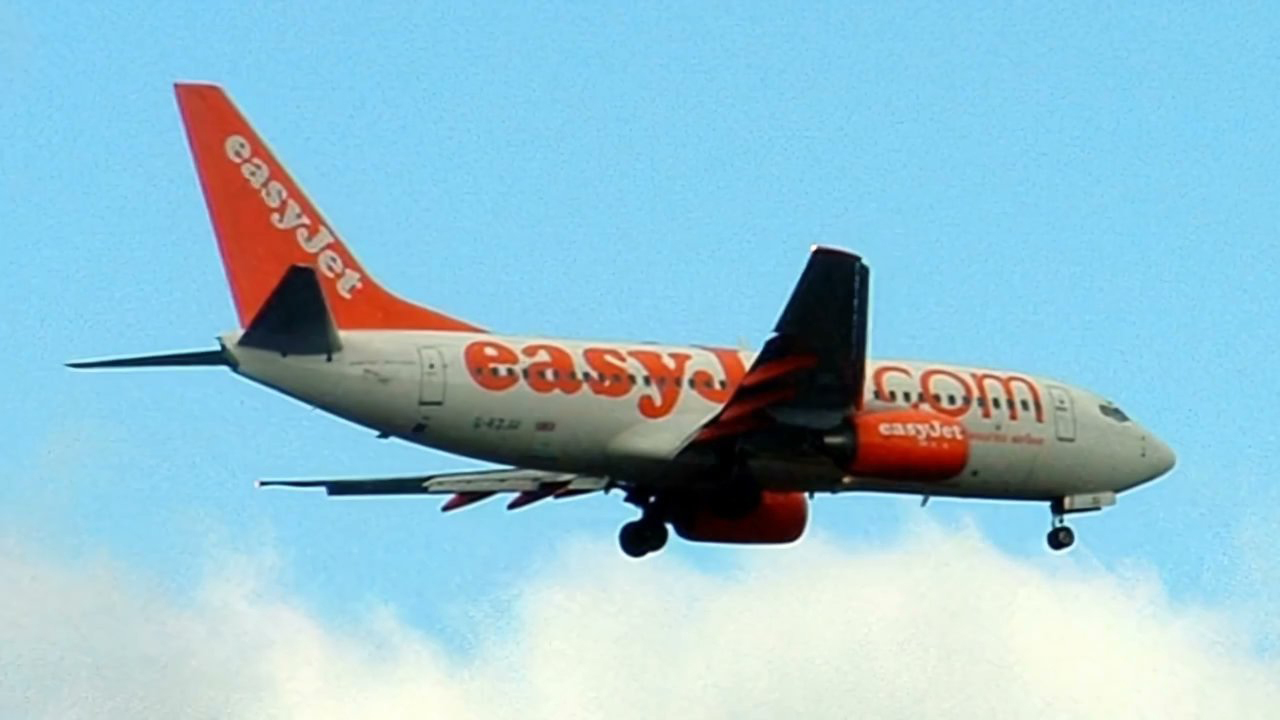
By the end of the decade, easyJet had taken delivery of its first Boeing 737-300s, introduced online booking, and opened a second base at London Gatwick. This airport would become the heart of its operations.
2000s: Gatwick and the Airbus Era
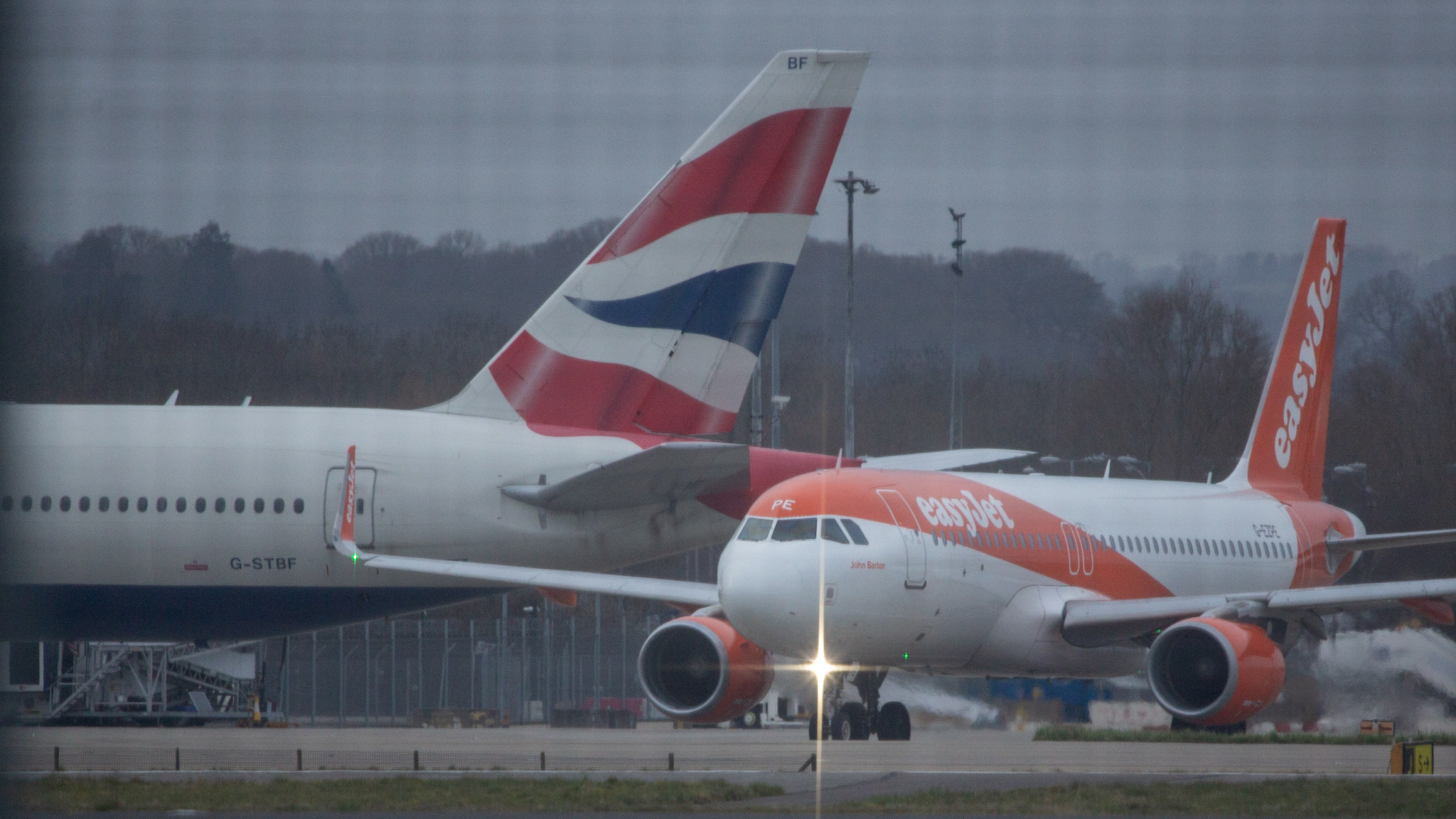
easyJet Airbus A320 (G-EZPE “John Bartan”) taxiing past a British Airways Airbus A350-1000 (G-STBF) at London Gatwick. The two airlines — Gatwick’s largest carriers — illustrate the diversity of UK aviation.
2010s: Expansion, Efficiency and Identity
easyJet’s story in the 2010s was one of maturity. The airline refined its livery, modernised its fleet with Sharklet-equipped A320S, and introduced the A320neo powered by CFM LEAP engines, offering quieter and more fuel-efficient operations. The Gatwick–Europe network exploded, linking leisure and business markets from Iceland to Israel.
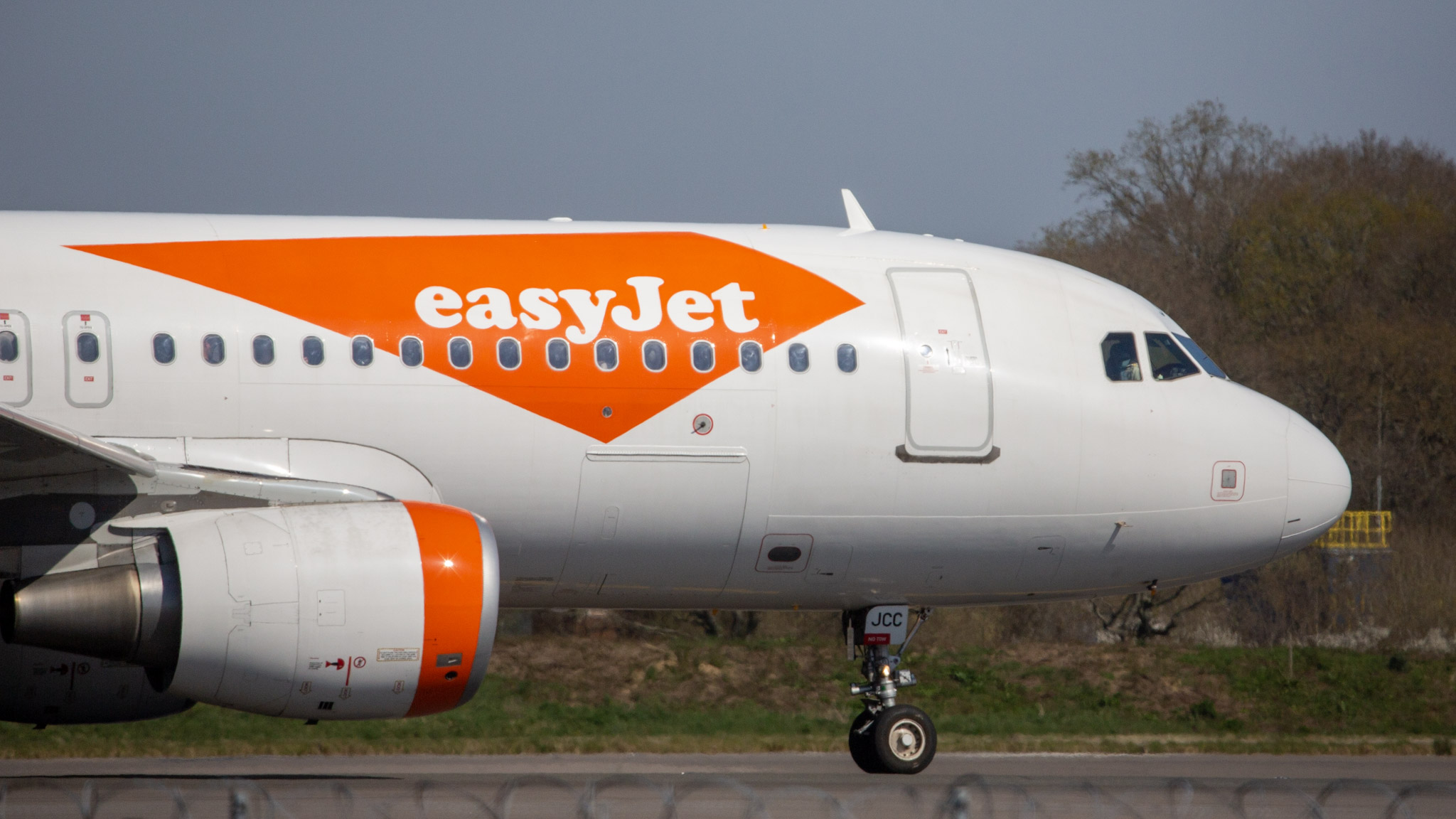
easyJet Airbus A319 (G-EZJC) lines up for departure at Gatwick, wearing the 2015-era livery featuring the clean orange-on-white arrow motif.
2020s: A Sustainable Flightpath
Despite the turbulence of the COVID-19 era, easyJet adapted quickly. Its modern Airbus fleet, high load factors, and commitment to net-zero by 2050 positioned the airline as a sustainability leader among low-cost carriers. Collaborations with Rolls-Royce and Wright Electric explore hybrid and hydrogen-powered flight for the next generation.
As of 2025, easyJet operates A320neo and A321neo aircraft almost exclusively — a far cry from the clattering 737-200s of 1995.
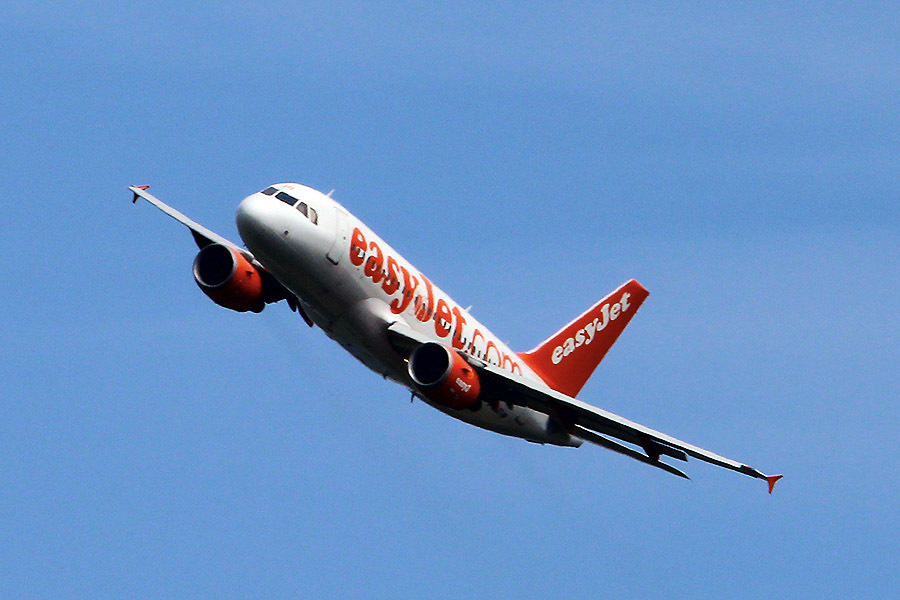
easyJet Airbus A319 banking over the English coast — a familiar sight for spotters through the 2000s and
Three Decades On: The Legacy of Accessibility
Thirty years after that first Luton–Glasgow flight, easyJet stands as one of Europe’s defining aviation success stories. It reshaped public expectations of what air travel could be — simple, affordable, and surprisingly stylish.
From orange-tailed 737s to whisper-quiet A321neos, easyJet’s story mirrors the evolution of short-haul flight itself. And for those of us who’ve watched its aircraft through the lens at Gatwick’s perimeter fence, the airline’s thirtieth birthday feels like our own milestone too — three decades of orange in the skies.